

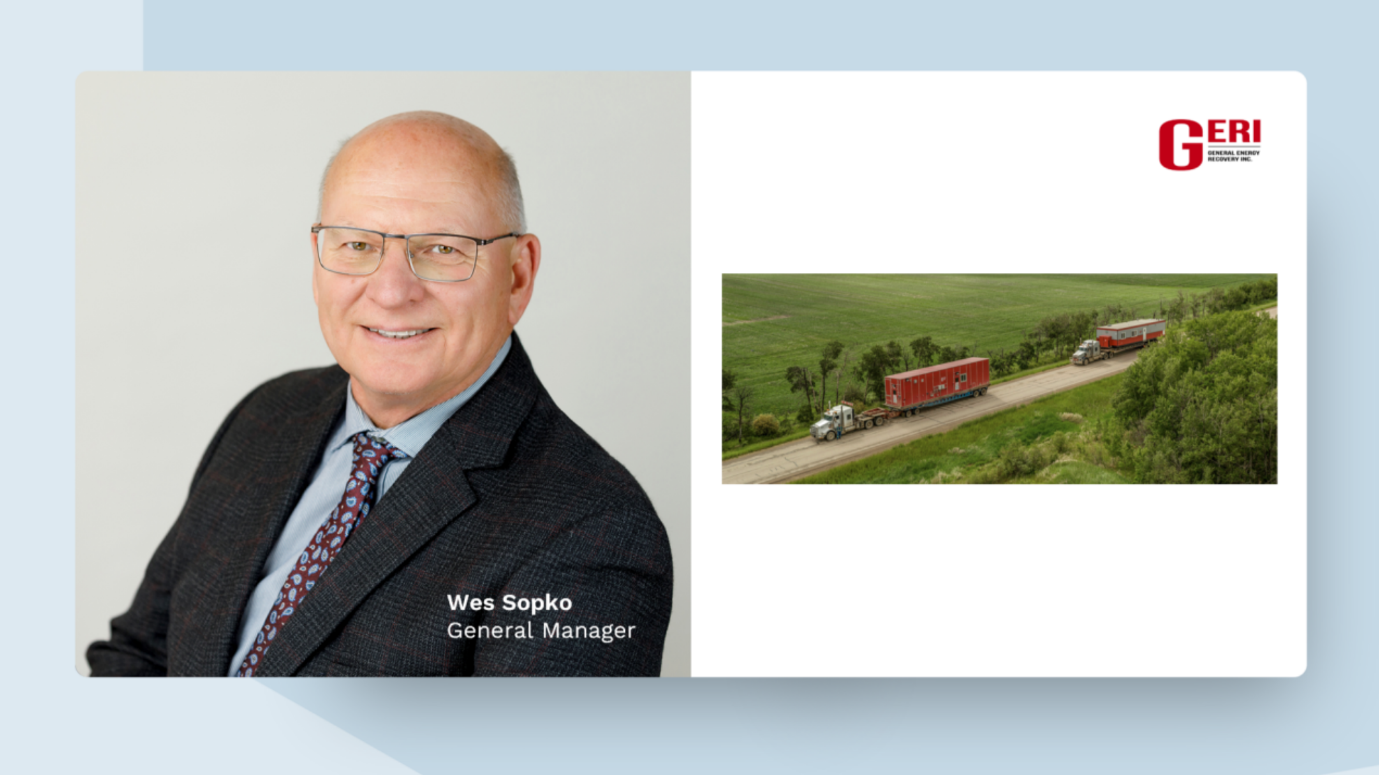
Wes Sopko has been GERI’s General Manager since 2016, joining the company when it was just a start-up. His responsibilities include field operations, tool operations and design, and logistics, among other things.
Wes works directly with GERI’s field staff in Lloydminster, Alberta, and the engineering team in Calgary, ensuring projects go off without a hitch.
In addition to supervising the GERI operations team, including an engineer on active projects, Wes oversees up to 40 people during equipment moves to and from a client’s site.
We sat down with Wes to discuss the process of deploying GERI from start to finish.
GERI: Can you describe the steps required before GERI’s equipment can move to the site?
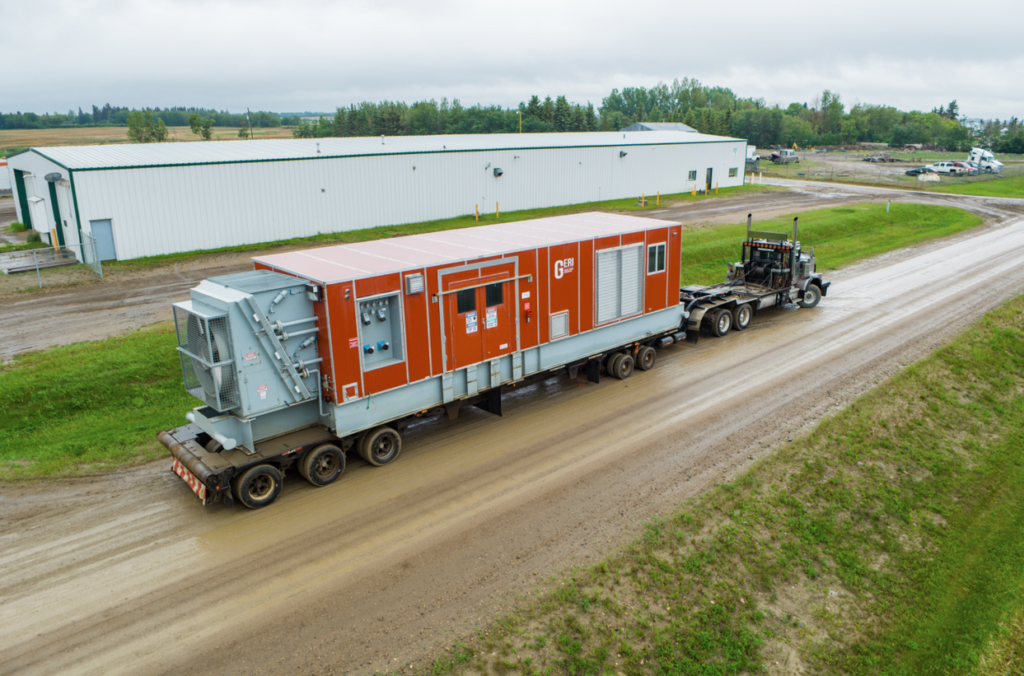
WES: Once the project site permits are granted, either by the Alberta Energy Regulator (AER) or the Ministry of Energy Resources (MER) in Saskatchewan, I plan the logistics for the transportation of the equipment onto the client’s site. At this point, the oil well has been re-completed, and the client is ready for GERI to arrive.
I verify that all the necessary permits to move GERI’s equipment down the roads have been issued and coordinate the trucking. The route we take depends on each country’s various specifications due to the size of the loads, so they determine what roads we can use when we’re moving.
Prior to this time, I notified GERI support crews, which include contracted fitting crews, programmers and mechanics. They need ample notice as to where and when GERI will be at the site. I plan these weeks in advance of when we need to be on site. You can’t just call a mechanic on Monday and say, “Hey, I need you here Thursday!” It’s the same thing for the fitting crews. They’re so busy, you must book them well in advance.
I also need to call the facility operator to find out how much water we will require per day and to find out where they will be sourcing the water. GERI’s support team includes water haulers, mechanics, instrumentation, and programmers. Once the roads and permits are assigned, then we can start transporting our technology to the site.
Before moving the equipment, we’ll go out to the site a day or two beforehand to see exactly where all the equipment is going to be placed. GERI’s Direct Contact Steam Generation (DCSG) technology must be spaced 25 meters from the wellhead. Then, depending on the site, we know exactly what to expect and where to set down the equipment.
If we’re on a multi-well pad, we’ll place the DCSG and supporting equipment in the optimal location, so that once we finish steaming the first well, we’ll move the steam line over to the next well, without having to move the equipment. We do not want to move it if we do not have to.
GERI: How long does it take GERI to move from the Lloydminster yard to a site and set up?
WES: It takes 13 loads to move all the equipment out to the site. GERI’s miscellaneous equipment takes three loads, which we manage with smaller trucks, as the big trucks are costly to hire.
Depending on how far we must travel and what the weather is like, it takes about one and a half to two days. It can take up to four days from Lloyd, because of the travel time. Once the trucks have unloaded, they can travel back, reload, and return the following morning. We set our expectations on how far we can go and how much we can get done safely on the first day
We move between 65% and 70% of the equipment into place on day one, including travel time. Then, on day two, the remaining equipment is delivered to the site and set in place.
On day two, we finish spotting the equipment. Then it’s just the fitting crew left on site, and a couple of days later, the GERI’s mechanics and programmer will arrive to begin commissioning the equipment.
Factors that determine the length of time it takes to set up the equipment are the time of year and the temperature. These are safety factors that must be considered when working in hot and cold weather, and the length of daylight hours. Worker safety is the priority and can not be compromised.
GERI: Once everything is on site, how soon can GERI’s DCSG technology be operational?
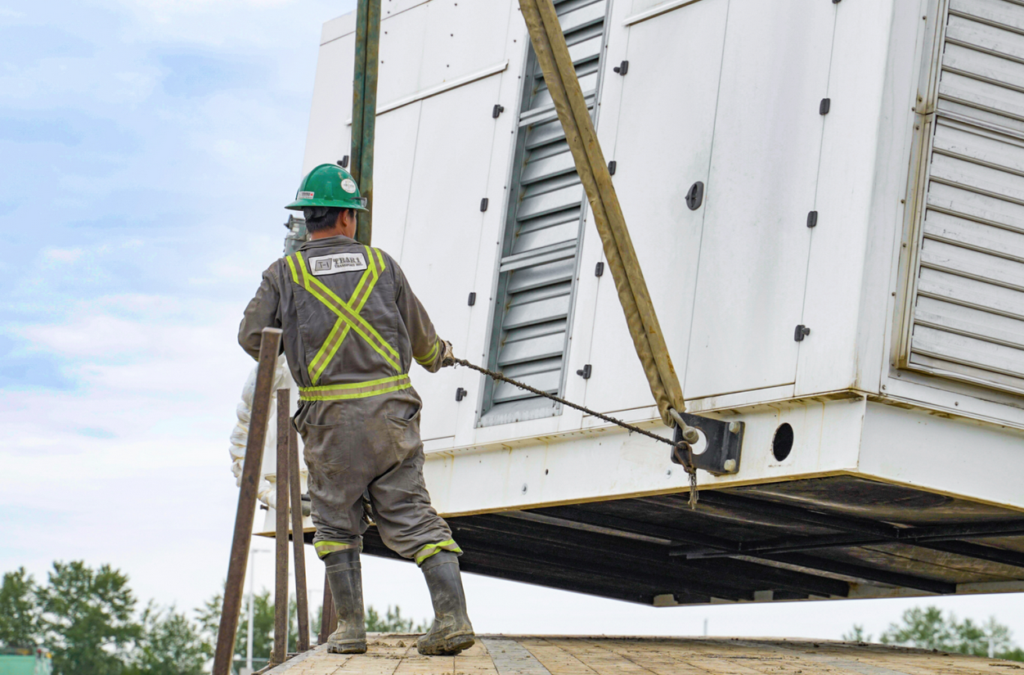
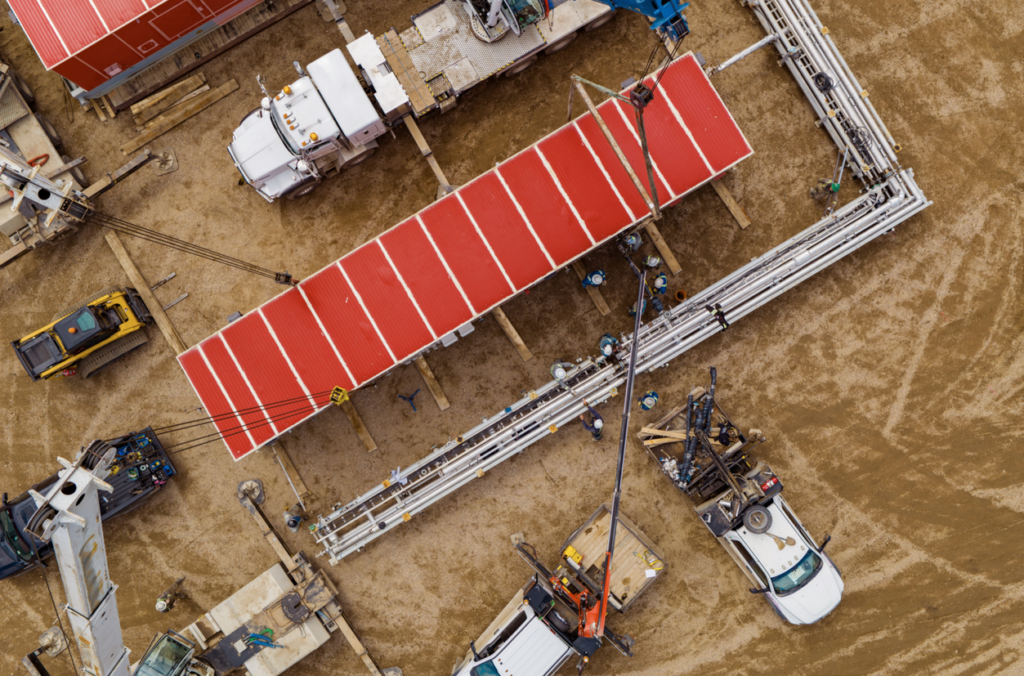
WES: From the time the equipment is spotted on location, it typically takes about three and a half days to complete the setup, including the rigging. Initially, when the equipment is placed, we work quickly to attach the bolts and flanges from the pipe spools to the pipe rack to ensure it’s correctly positioned before moving to the next building.
We do the final bolt-up after the trucks and the pickers are gone, because they’re the most expensive part of the move. We want to release them as soon as possible. Bolting up and ensuring each flange is torqued to its correct spec is critical because things can loosen up in transit.
At the same time, we begin pulling electrical cables, which usually takes a full day to complete. We also ensure all flanges are torqued inside the process buildings to ensure there are no leaks.
Five and a half days in, and we’re ready to start commissioning, which takes a half-day to complete.
The control room operator (CRO) and programmer will coordinate the commissioning with electrical and instrumentation people to calibrate and verify all devices. This involves starting to rotate motors and operate valves to make sure everything is working properly and verify that everything is operating correctly.
Once everything is ready, we communicate with the client to get the go-ahead for GERI to begin steaming to the well. This requires safety meetings between GERI and the client before moving from a cold operation to a hot operation. Once this is completed, we bring flue gas into the process.
Then we’ll do our final walkthroughs with the client to ensure it meets their standards and expectations for the job.
GERI: What is the final step before GERI’s DCSG can commence operations at the site?
WES: Once both the client and GERI’s operations team are satisfied, we move into the warm-up phase. When we reach the desired heat and injection pressure to the well, GERI stays in place for 30, 60 days or whatever the timeline that is required by the client.
GERI: You have set up and operated the DCSG a dozen times or so; how has the process evolved?
WES: Safety remains the utmost priority during operations involving mobilizing and demobilizing equipment, with numerous moving parts. Continuous improvement is essential to reduce GERI’s setup time from six days to five and a half, or better.